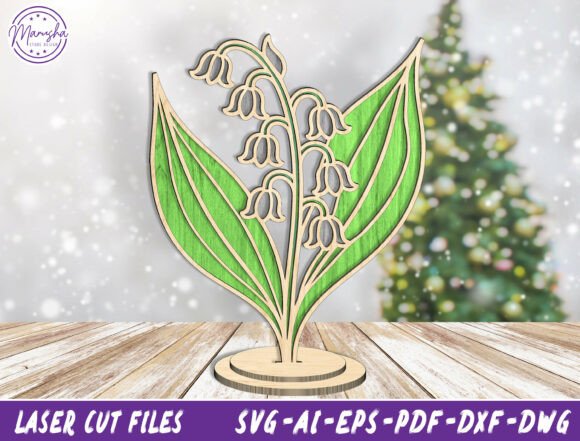
Lily of the Valley Flower 3D Layered Svg: A Practical Guide for Creators and Makers
In the realm of digital fabrication, the transition from a flat design to a tangible, three-dimensional object requires more than just artistic vision; it demands precision in file structure and material understanding. The Lily of the Valley Flower 3D Layered Svg represents a specific category of digital assets designed to bridge this gap. Unlike standard single-layer vector graphics used for simple engraving or cutting, this file type is engineered with depth in mind. It consists of multiple nested layers that, when cut from materials like wood, MDF, acrylic, or cardstock, assemble into a standing floral sculpture. For professionals, hobbyists, and small business owners utilizing laser cutters such as Glowforge, Lightburn, Cricut, or Silhouette Cameo, integrating this asset into a workflow offers a streamlined path to high-value decorative products.
Understanding the Asset Structure and Workflow Integration
Before initiating any project, it is essential to understand what the Lily of the Valley Flower 3D Layered Svg actually provides within a production pipeline. This is not merely an image; it is a set of instructions for a machine. The file contains distinct paths for each "petal," leaf, and stem segment, arranged so that they interlock or stack to create volume. In a broader creative process, this asset fits into the "design-to-prototype" phase. Whether you are planning a seasonal collection for a craft fair, creating a custom gift for a client, or stocking inventory for an online store, this file serves as the foundational blueprint.
The utility of this specific design lies in its compatibility with various software ecosystems. Because the package typically includes formats such as SVG, DXF, PDF, EPS, AI, and DWG, it eliminates the friction often associated with file conversion. When working with Lightburn or similar vector-based laser cutting software, importing a native SVG or DXF ensures that node counts remain low and lines stay crisp. This reduces processing time and minimizes the risk of errors during the nesting stage. For users of vinyl cutters like the Cricut or Silhouette Cameo, the layered nature allows for intricate paper crafts where stacking creates a pop-up effect, expanding the utility beyond hard materials to include delicate cardstock projects.
Preparation and Material Selection Strategies
Successful implementation begins with preparation. Before loading the Lily of the Valley Flower 3D Layered Svg into your cutting software, consider the end-use scenario. Are you creating a durable home decor piece, a lightweight wedding favor, or a sample for a botanical art exhibition? The answer dictates your material choice and machine settings. For instance, if the goal is a sturdy table centerpiece, 3mm to 5mm birch plywood or MDF is ideal. These materials hold the fine details of the lily of the valley blooms well but require precise power and speed settings to prevent charring on the inner layers.
Conversely, if the project targets a softer aesthetic or a lower cost point, cardstock or thin basswood may be more appropriate. Acrylic offers a modern, translucent alternative, particularly effective when backlit, though it requires different handling techniques to avoid melting edges. The versatility of the file format means you can test one design across multiple substrates without needing to purchase new assets. This adaptability is crucial for entrepreneurs who need to diversify their product lines quickly. By preparing a matrix of material tests—cutting a few sample layers of each potential substrate—you establish a quality control baseline before committing to a full production run.
Optimizing the Cutting and Assembly Process
Once materials are selected, the execution phase involves optimizing the cut settings for the specific layering requirements. The Lily of the Valley Flower 3D Layered Svg features delicate curves and narrow gaps between petals. If the kerf (the width of the material removed by the laser) is too wide, the interlocking parts may become loose, compromising the structural integrity of the final standing flower. Therefore, calibration is key. Run a grid test on your chosen material to determine the exact power and speed combination that cuts cleanly without burning the surrounding area.
Efficiency in the cutting room also depends on how you nest these files. Since the design is layered, you will likely have many small pieces. Organizing your workspace to sort these pieces immediately after cutting prevents assembly confusion later. Labeling trays or using magnetic mats can help keep the layers in order. During the assembly phase, the workflow shifts from digital to manual dexterity. The layers must be stacked according to the design's logic, often requiring a light application of adhesive or a friction fit. For professional results, consistency in glue application is vital to ensure the flower stands upright and maintains its graceful silhouette.
Strategic Applications for Business and Personal Projects
The Lily of the Valley Flower 3D Layered Svg is particularly well-suited for seasonal marketing strategies. Spring and Mother's Day are peak times for floral-themed gifts. By having this asset ready in your library, you can rapidly produce limited-edition items that capitalize on current trends. For small business owners, this translates to higher margins because the digital cost is negligible, and the perceived value of a hand-assembled, 3D wooden or acrylic flower is significantly higher than a flat print.
Beyond commercial applications, this file supports personal goals related to skill development and home aesthetics. Hobbyists can use the design to practice advanced laser cutting techniques, such as managing complex vectors and mastering material-specific settings. Educators might incorporate it into STEM or art classes to demonstrate geometry in nature and the principles of digital manufacturing. The design's elegance makes it a versatile addition to any portfolio, showcasing the ability to translate natural forms into structured, manufactured objects.
Long-Term Usability and Asset Management
Integrating this file into your long-term workflow requires proper organization. Store the original vector files in a cloud-based system or a dedicated local server, categorized by theme (e.g., "Spring Floral," "Botanical"). Keeping backups of all supported formats (SVG, DXF, AI, etc.) ensures that you are never locked out of a project due to software updates or platform changes. As technology evolves, having the source files in industry-standard formats guarantees future compatibility with newer machines or software versions.
Furthermore, maintaining a record of successful cut settings for each material type creates a valuable reference library. If you switch from a Glowforge to a different CO2 laser, your documented parameters serve as a starting point, reducing trial-and-error time. This systematic approach to asset management enhances overall productivity, allowing you to focus more on creative decisions and less on troubleshooting technical issues. The Lily of the Valley Flower 3D Layered Svg is not just a single-use template; it is a reusable tool that, when managed correctly, contributes to a sustainable and efficient creative economy.
Conclusion: Elevating Your Creative Output
The decision to utilize the Lily of the Valley Flower 3D Layered Svg is a strategic move toward producing higher-quality, dimensionally rich work. It addresses the growing demand for unique, handmade goods that blend natural beauty with modern manufacturing precision. By understanding the file's structure, selecting appropriate materials, and refining your cutting and assembly processes, you can seamlessly integrate this design into diverse workflows. Whether you are a freelancer fulfilling a custom order, a business owner scaling a product line, or an enthusiast exploring new techniques, this asset provides the necessary foundation for success. Its flexibility across platforms and materials ensures that it remains a relevant and powerful resource in your digital toolkit, enabling you to bring a touch of nature and elegance into any space with confidence and efficiency.