Understanding the 3D Inflated Tumbler Wrap: A Practical Guide for Sublimation Creators
In the competitive landscape of custom drinkware, visual impact often dictates market success. Among the various design techniques available to sublimation artists, the 3D Inflated Tumbler Wrap has emerged as a distinct category that offers depth and dimensionality without requiring complex physical molding. This digital design approach simulates a raised, puffy texture on flat surfaces, creating an illusion of volume that catches the eye and adds perceived value to standard tumblers. For creators evaluating their next project or product line, understanding the mechanics, requirements, and limitations of this specific style is essential for making informed decisions about production workflows and customer expectations.
The Distinctive Nature of 3D Inflated Designs
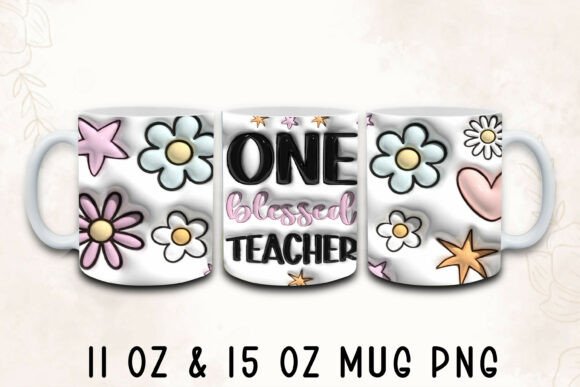
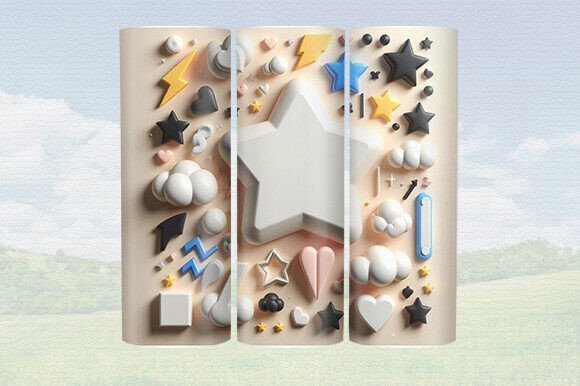
The primary characteristic of a 3D Inflated Tumbler Wrap lies in its optical engineering. Unlike traditional flat vector graphics or simple raster images, these wraps utilize sophisticated shading, lighting effects, and perspective distortion to mimic three-dimensional objects adhered to the tumbler surface. When printed via sublimation, the result is not physically raised; rather, it relies on the human eye's interpretation of light and shadow to create the sensation of inflation. This technique allows for intricate details, such as the curvature of a balloon, the gloss of a bubble, or the softness of a plush toy, to appear convincingly tactile.
This distinction is crucial when comparing options. While a standard full-wrap design covers the entire surface with a pattern, an inflated wrap typically features specific focal points where the "inflation" effect is most pronounced. The design must account for the cylindrical geometry of the tumbler, ensuring that the simulated shadows align correctly with how light would naturally hit a curved object. This level of detail separates high-quality inflated wraps from generic clip art that may look distorted or flat once transferred to the vessel.
Evaluating File Formats and Technical Requirements
When sourcing a 3D Inflated Tumbler Wrap, the file format and resolution are critical factors that determine the final print quality. Most professional designs in this category are delivered as high-resolution PNG files. It is important to note that these are raster-based images, meaning they consist of pixels rather than mathematical paths. Consequently, they cannot be edited using vector software like Adobe Illustrator or CorelDRAW in the same way an SVG file can. You cannot simply change the color of a single element or resize the image indefinitely without losing clarity.
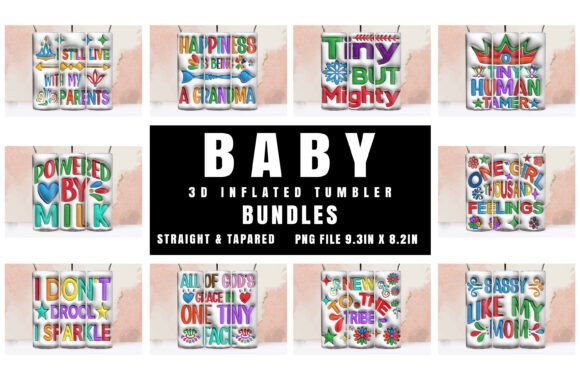
The standard package for a comprehensive 3D Inflated Tumbler Wrap usually includes two specific variations:
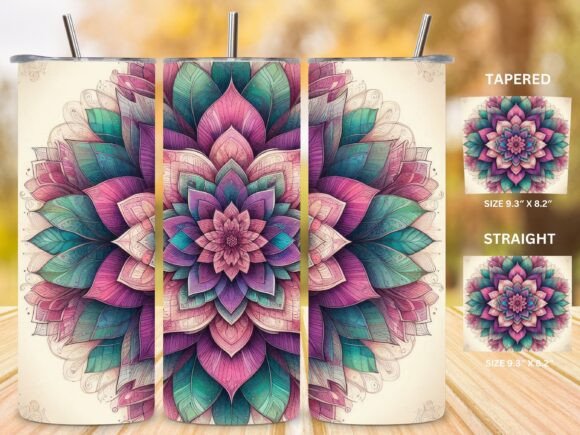
- Straight Cut Version: Designed for straight-sided tumblers (typically 20oz or 30oz straight cups).
- Tapered Version: Engineered specifically for tapered tumblers, which narrow toward the bottom. Using a straight wrap on a tapered cup will result in misaligned edges and distorted imagery.
Both versions typically adhere to a print size of approximately 9.3 inches by 8.2 inches. This dimension is calculated to cover the printable area of standard sublimation blanks effectively. Because these are high-quality PNGs, they require precise handling in sublimation crafts software. Users must ensure their printing workflow supports high DPI settings to maintain the integrity of the subtle gradients that create the 3D effect. If the resolution is insufficient, the smooth transitions between light and dark areas will pixelate, breaking the illusion of depth and rendering the design cheap-looking.
Comparing 3D Wraps Against Alternative Styles
Choosing between a 3D Inflated Tumbler Wrap and other design formats depends heavily on the intended aesthetic and the target audience. One common alternative is the use of actual physical embellishments, such as epoxy domes, rhinestones, or vinyl decals applied over the sublimation print. While physical elements provide genuine texture, they introduce significant tradeoffs regarding durability, cost, and production time. Physical add-ons can peel, chip, or scratch off during washing, whereas a well-executed 3D digital wrap is sealed within the coating of the tumbler, offering superior longevity.
Another comparison point is the flat full-wrap design. Flat wraps are excellent for patterns, backgrounds, or text-heavy designs but often lack the pop required for standalone character or object-focused marketing. The 3D inflated style excels in scenarios where the product needs to stand out on a shelf or in a social media feed. The visual depth draws attention more aggressively than a flat graphic. However, this comes with a limitation: the 3D effect is highly dependent on the lighting conditions of the photograph or display. In low light, the illusion may diminish, whereas a flat design remains consistent regardless of illumination.
Furthermore, the flexibility of editing differs significantly. With vector-based alternatives (SVG), a designer can customize colors, fonts, and layouts instantly. With a pre-made 3D Inflated Tumbler Wrap, customization is limited to what can be achieved through photo manipulation software like Photoshop. If a client requires a specific color palette that conflicts with the original shading of the 3D effect, recreating the depth manually is a complex task. Therefore, this format is best suited for projects where the design intent is fixed or where minor adjustments are acceptable.
Decision Factors: When to Choose This Format
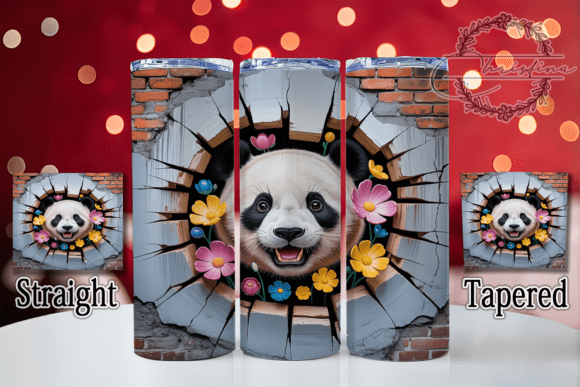
Determining whether a 3D Inflated Tumbler Wrap is the right choice involves weighing several practical considerations. This format is an ideal fit for businesses focusing on character merchandise, novelty items, or holiday-themed products where visual whimsy is a selling point. For example, a design featuring a floating heart, a blooming flower, or a cartoon character popping out of the cup benefits immensely from the inflated aesthetic. It transforms a standard promotional item into a collectible piece.
However, there are situations where this option may not be suitable. If your workflow relies heavily on rapid customization for individual clients—such as adding names, dates, or specific team logos directly onto the design—a static PNG wrap may hinder efficiency. In these cases, a layered PSD file or a vector-based template might be more appropriate, even if the initial 3D effect is less pronounced. Additionally, if you lack experience with sublimation crafts software, the learning curve for properly positioning and scaling these specific files can be steep. Misalignment on a tapered cup, for instance, can ruin the entire print job, leading to wasted materials.
Cost-effectiveness is another factor. While the digital file itself is a one-time purchase, the perceived value added to the final product can justify a higher price point for the consumer. Customers often associate the "3D look" with premium quality, allowing sellers to charge a margin above standard flat-printed tumblers. Conversely, if the production budget is extremely tight and speed is the only priority, simpler flat designs might offer a faster turnaround with less risk of error.
Practical Implementation and Limitations
Successful implementation of a 3D Inflated Tumbler Wrap requires strict adherence to technical specifications. Since the files provided are non-editable PNGs, the user must have a solid grasp of sublimation transfer processes. This includes selecting the correct heat press temperature, pressure, and time to ensure the ink bonds permanently to the polyester coating of the tumbler. Any deviation can result in ghosting or fading, which destroys the delicate gradient work inherent in the 3D effect.
Limitations also extend to the types of tumblers used. These wraps are optimized for standard sizes. Attempting to stretch a 9.3″ x 8.2″ design onto a significantly larger or smaller blank will distort the perspective, making the "inflated" elements look squashed or elongated. It is vital to match the file version (straight vs. tapered) exactly to the blank being used. There is no universal "one-size-fits-all" solution in this niche; precision is key.
Ultimately, the decision to use a 3D Inflated Tumbler Wrap should be driven by the desired end result. If the goal is to create a visually striking, durable, and premium-looking product with minimal physical labor, this digital approach offers a compelling solution. It bridges the gap between simple printing and complex physical crafting. However, it demands a certain level of technical proficiency and an understanding of its rigid file structure. By carefully evaluating these factors against your specific business needs and customer expectations, you can determine if this style aligns with your production capabilities and creative vision.