Understanding the 3D Layered Flower Earring SVG Cut File for Jewelry Design
In the realm of digital crafting and jewelry making, the 3D Layered Flower Earring SVG Cut File has emerged as a significant resource for creators seeking depth and dimensionality in their work. Unlike traditional flat vector designs, this specific file type is engineered to produce physical objects with multiple planes, allowing for intricate shadow play and texture that mimic hand-carved or sculpted pieces. For adults aged 20 to 50 who are evaluating tools for small business ventures, hobbyist projects, or professional prototyping, understanding the mechanics and utility of these layered files is essential for making informed purchasing decisions.
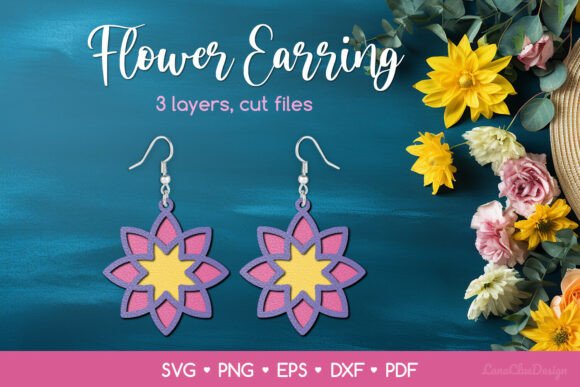
The core value of a Layered Flower Earring or Pendant Cut Files - Floral Jewelry Template lies in its structural composition. The design typically includes three distinct layers, each serving a specific function in the final assembly. When you download the package, you receive a zip file containing various formats: three separate SVG files for each layer, along with corresponding EPS, PDF, PNG, and DXF files. This multi-format delivery ensures compatibility across a wide range of cutting machines and software environments, from Cricut and Silhouette to professional laser cutters and CAD systems. All files feature a transparent background and are rendered at 300dpi, ensuring the highest quality output regardless of the medium used.
Anatomy of the 3-Layer Design System
To evaluate whether this resource fits your workflow, it is necessary to understand how the three layers interact. In a standard 3D layered design, the first layer often serves as the base or backing, providing structural integrity and color contrast. The second layer usually introduces the primary silhouette or the main floral motif, while the third layer adds fine details, such as petal textures, centers, or accent elements. This stratification allows the creator to stack materials—such as acrylic, wood, leather, or felt—to create a tangible sense of depth.
This approach differs significantly from single-layer cut files, which rely on internal weeding or engraving to suggest detail. With the 3D Layered Flower Earring SVG Cut File, the depth is physical rather than visual. This distinction is crucial when considering the end product's durability and aesthetic appeal. A three-dimensional flower earring created from these templates will cast shadows and catch light differently than a flat printed design, offering a premium feel that justifies higher price points in a retail environment.
Comparing Formats and Workflow Integration
One of the primary advantages of this specific template package is the inclusion of multiple file formats. While the SVG (Scalable Vector Graphics) format is the industry standard for vinyl and paper cutting machines, the presence of EPS, DXF, and PDF files broadens the scope of potential applications. For instance, DXF files are often preferred by users of laser cutters, particularly those working with thicker materials like acrylic or hardwood, where precise vector paths are critical for clean edges. Similarly, EPS files remain a staple in professional graphic design software like Adobe Illustrator, allowing for further customization before cutting.
When comparing this comprehensive package to alternatives that offer only a single format, the tradeoff becomes clear. Single-format files may be cheaper, but they limit flexibility. If a designer intends to scale a project from home-based vinyl cutting to industrial laser production, the need for high-quality vector data in multiple formats becomes immediate. The 3D Layered Flower Earring SVG Cut File eliminates the friction of converting files, reducing the risk of path errors or resolution loss during the transition between different hardware setups.
Furthermore, the inclusion of 300dpi PNG files provides a practical solution for non-cutting applications. These raster images can be used for mockups, social media marketing, or print-on-demand services where vector editing is not required. This versatility makes the package a robust investment for creators who operate across multiple channels, from physical product creation to digital storefronts.
Evaluating Strengths and Limitations
Like any specialized tool, the use of 3D layered cut files comes with specific strengths and limitations that must be weighed against project requirements. The most significant strength is the ability to achieve a high-end, artisanal look without the need for complex carving skills. By simply stacking pre-cut layers, a crafter can produce jewelry that appears to have been meticulously sculpted by hand. This efficiency is particularly valuable for small businesses aiming to scale production while maintaining a unique brand identity.
However, there are tradeoffs to consider. The primary limitation involves material thickness and adhesion. Because the design relies on stacking three separate pieces, the total thickness of the final product increases. This can make the earrings heavier than flat counterparts, potentially causing discomfort if worn for extended periods. Additionally, the bonding process requires precision; if the layers are not aligned perfectly or if the adhesive fails, the dimensional effect is compromised. Creators must factor in the time required for assembly and finishing, which is more intensive than producing a single-layer item.
Another consideration is the complexity of the design itself. While the 3D Layered Flower Earring SVG Cut File offers intricate details, overly complex patterns may result in fragile components, especially when using thin materials like cardstock or delicate acrylic sheets. It is often necessary to test the design on scrap material to ensure that the smallest details hold up during the cutting and handling process. This testing phase is an essential part of the decision-making process for anyone new to layered crafting.
Decision Factors: When to Choose Layered vs. Flat Designs
Determining when the Layered Flower Earring or Pendant Cut Files - Floral Jewelry Template is the right choice depends largely on the intended market and the desired aesthetic. If the goal is to create statement pieces for weddings, formal events, or boutique retail, the added dimension provided by the three-layer system is often a decisive factor. Customers looking for unique, tactile jewelry are generally willing to pay a premium for items that stand out due to their physical depth and craftsmanship.
Conversely, if the objective is mass production of lightweight, everyday accessories, a flat design might be more appropriate. Flat cut files are faster to produce, require less assembly time, and result in lighter products that are comfortable for all-day wear. They are also more forgiving when working with flexible materials like vinyl or fabric, where layering can introduce bulkiness or stiffness. In scenarios where speed and cost-efficiency are the primary drivers, the additional steps involved in creating 3D layered pieces may outweigh the aesthetic benefits.
Material selection also plays a pivotal role in this decision. The 3D Layered Flower Earring SVG Cut File shines when paired with rigid materials like wood, metal, or thick acrylic, where the layers can be securely glued or riveted together. For softer materials, the structural integrity of the three layers may be difficult to maintain without additional support mechanisms. Therefore, creators should align their choice of file type with the properties of the materials they intend to use.
Practical Applications and Customization Potential
Beyond the immediate application of earrings, the versatility of these floral templates extends to pendants, brooches, and decorative accents. The modular nature of the three-layer system allows for creative experimentation. Designers can mix and match colors, swap out middle layers for different textures, or even incorporate mixed media elements like resin or gemstones into the center layer. This adaptability transforms a single purchase into a foundation for a diverse product line.
For those interested in branding, the ability to customize each layer independently offers a strategic advantage. A business could maintain a consistent outer silhouette while varying the inner details to create seasonal collections or limited editions. This level of control is difficult to achieve with monolithic vector files that lack separated layers. The 3D Layered Flower Earring SVG Cut File essentially acts as a customizable kit, empowering creators to iterate quickly without starting from scratch.
Ultimately, the decision to utilize these professional-grade files hinges on a balance between artistic vision and practical constraints. By understanding the mechanics of the three-layer system, the benefits of multi-format delivery, and the specific contexts where dimensional design excels, crafters and entrepreneurs can make choices that enhance both their creative output and their operational efficiency. Whether for a weekend hobby or a growing enterprise, the 3D Layered Flower Earring SVG Cut File represents a powerful tool for those ready to elevate their work beyond the flat plane.