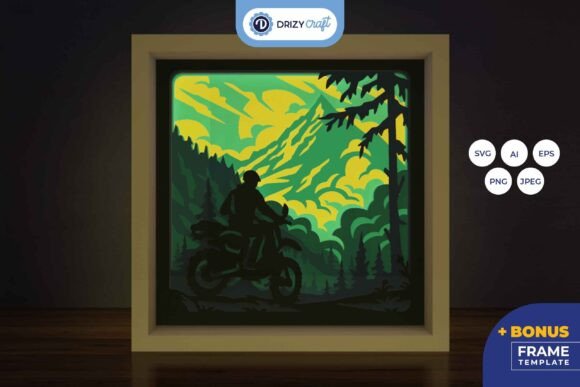
Motorcycle 3D Shadow Box - The Rider 3D
In the realm of visual storytelling, few mediums capture the imagination quite like the interplay of light and depth found in a Motorcycle 3D Shadow Box - the Rider 3D. This layered, square paper-cutting template transforms flat imagery into a dynamic spatial experience, offering designers a unique tool to explore dimensionality without relying solely on digital rendering. For professionals seeking to elevate their creative assets, this design resource bridges the gap between traditional print craftsmanship and modern aesthetic trends, providing a tangible way to engage audiences through intricate visual hierarchy.
The Intersection of Craft and Digital Design
At its core, this project is more than just a craft kit; it is a study in composition and layering. The template arrives in multiple high-resolution formats—including AI, EPS, PNG, SVG, and JPEG—ensuring compatibility with diverse design workflows. Whether you are utilizing precision cutting machines like Silhouette or Cricut, or opting for manual assembly with art knives and scissors, the seven distinct layers allow for meticulous control over the final visual output. Each layer contributes to the overall narrative, creating a sense of movement and perspective that static images often struggle to convey.
From a graphic design perspective, the ability to manipulate these layers offers profound insights into visual communication. By adjusting the spacing between layers, designers can influence how light interacts with the subject, effectively sculpting the image with shadows. This technique is particularly relevant when considering how brand identity can be expressed through physical media. A well-executed shadow box demonstrates attention to detail and a commitment to quality, traits that resonate deeply with consumers in an increasingly digital world.
Practical Applications Across Industries
The versatility of the Motorcycle 3D Shadow Box - The Rider 3D Light Box extends far beyond personal decoration. Its principles of depth and lighting can be adapted for various professional applications:
- Branding and Identity: Incorporating 3D elements into brand collateral can differentiate a company from competitors. The tactile nature of such designs reinforces brand values of innovation and craftsmanship.
- Marketing Materials: Unique displays at trade shows or retail environments can capture attention instantly. The dramatic effect of LED strips placed between layers creates a focal point that draws viewers in.
- Editorial and Packaging Design: Concepts derived from shadow box layering can inspire packaging structures that offer a "reveal" experience, enhancing unboxing moments and product perception.
- Digital Marketing and Social Media: High-quality photography of these physical creations serves as compelling content for social platforms, showcasing a brand's creative capabilities and engaging followers with visually rich media.
Optimizing Visual Impact and Usability
When integrating such complex designs into your workflow, scalability and consistency are paramount. The included SVG file allows for resizing while maintaining aspect ratio, a critical feature for ensuring the design remains crisp across different formats. However, designers must remain mindful of the limitations inherent in physical production. The final color palette may vary slightly due to lighting sources and paper stock, necessitating careful selection of materials to match brand guidelines.
Typography and composition also play vital roles in the surrounding context of the artwork. If the shadow box is part of a larger presentation or website layout, the typography should complement the intricate details of the rider and motorcycle without competing for attention. Clean, modern typefaces often work best to frame such detailed imagery, allowing the visual complexity of the layers to take center stage.
Furthermore, consider the user experience (UX) implications if this design concept is translated into digital interfaces. The principle of layering used in the shadow box can inform UI design decisions, where depth cues help users understand navigation hierarchies and interactive elements. By studying how light and shadow define space in the physical box, designers can create more intuitive and immersive digital environments.
Elevating Your Creative Projects
Selecting the right creative assets is about more than just aesthetics; it is about strategic communication. The Motorcycle 3D Shadow Box - the Rider 3D exemplifies how thoughtful design choices can transform a simple image into a powerful statement. Whether used as a framed wall decoration, a custom gift, or a prototype for a larger branding campaign, the potential for impact is significant.
As you explore new ways to express your brand or enhance your design portfolio, remember that the most effective visuals often combine technical precision with artistic flair. By leveraging tools like this layered template, you gain the flexibility to experiment with depth, light, and texture, ultimately producing work that not only looks professional but also connects emotionally with your audience. In a landscape saturated with content, the ability to create something tangible and visually striking remains a competitive advantage worth pursuing.