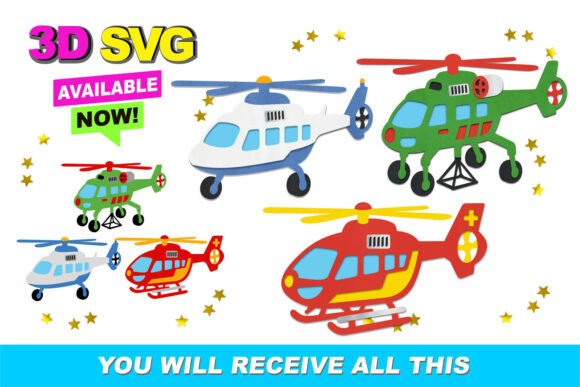
Airplanes Elements 3D SVG: A Practical Evaluation for Crafters
The digital crafting landscape offers a vast array of resources, ranging from simple line art to complex layered designs. Among these, the Airplanes Elements 3D SVG collection has gained attention for its specific utility in creating depth and dimension on flat surfaces. This article provides an objective analysis of what this file format entails, how it functions within popular design ecosystems, and whether it aligns with your specific project goals. By understanding the technical requirements and creative applications, you can make an informed decision about integrating these files into your workflow.
Understanding the Airplanes Elements 3D SVG Format
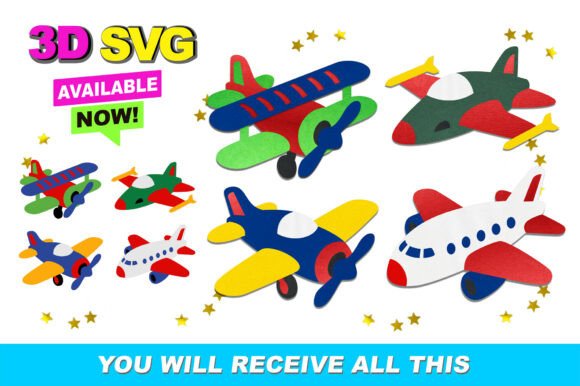
At its core, an SVG (Scalable Vector Graphics) file is a vector-based image format that uses mathematical equations to define shapes rather than pixels. The Airplanes Elements 3D SVG collection takes this standard further by utilizing multiple layers within a single file structure to simulate three-dimensional effects. Unlike a standard raster image, which loses quality when resized, or a basic flat SVG, these files contain distinct paths representing different "depths" of the airplane design.
When downloaded, the package typically arrives as a zipped folder containing the necessary SVG files. This compression ensures efficient transfer while keeping the file integrity intact. Inside, users will find the layered components required to achieve the 3D look. It is important to note that the "3D" aspect is not a true volumetric model like those used in 3D printing; rather, it is a visual technique achieved through offset layers, shadows, or stacked elements that create the illusion of depth when cut and assembled.
Compatibility with Cutting Machines and Software
One of the primary considerations for any digital download is software compatibility. The Airplanes Elements 3D SVG collection is specifically optimized for two dominant platforms in the DIY cutting community: Silhouette Studio and Cricut Design Space. These programs are designed to parse vector data and translate it into cutting paths for electronic cutting machines.
- Silhouette Studio: Users can import the SVG directly, where the software recognizes the individual layers. This allows for precise manipulation of each element before sending the job to the machine.
- Cricut Design Space: Similarly, Cricut's cloud-based software accepts these files, allowing users to upload, ungroup, and arrange the 3D components on their virtual canvas.
However, if you utilize a different type of cutting machine or software ecosystem, due diligence is required. While many modern machines support standard SVG imports, some proprietary systems may require conversion to DXF or PDF formats. Before purchasing or downloading, verify that your specific hardware can interpret layered vector files without losing the separation between the 3D elements. If your machine only supports single-layer cuts, the intended 3D effect will be lost unless you manually reconstruct the layers in compatible software.
Practical Applications and Creative Potential
The versatility of the Airplanes Elements 3D SVG makes it suitable for a wide range of projects beyond simple decoration. The layered nature of the design opens up possibilities for texture and shadow that flat images cannot replicate.
Cake Toppers and Edible Decor
For bakers and party planners, these files are excellent for creating edible cake toppers. By cutting the layers out of fondant, gum paste, or acetate, one can stack them to create a floating airplane effect above a dessert. The precision of the vector lines ensures clean edges, which is critical when working with delicate materials like sugar paste.
Apparel and Textile Projects
In the realm of apparel, heat transfer vinyl (HTV) benefits significantly from 3D SVGs. When applied to shirts, the layered design adds a tactile dimension that stands out visually. This is particularly effective for birthday celebrations, aviation-themed events, or children's clothing where a dynamic, pop-out look is desired.
Stickers and Paper Crafts
For sticker makers, the ability to print and cut with high precision allows for professional-grade results. The 3D elements can be printed on glossy paper and die-cut, offering a premium feel. Additionally, scrapbookers and cardmakers can use these files to create dimensional cards, layering the cutouts to give the impression that the airplane is flying off the page.
Benefits and Tradeoffs
Evaluating the Airplanes Elements 3D SVG requires weighing its advantages against potential limitations. The primary benefit is the aesthetic value. A well-executed 3D design elevates a project from amateur to professional by adding visual interest and depth. Furthermore, because these are vector files, they are infinitely scalable. You can cut a small version for a button badge or a massive version for a wall mural without any loss of resolution.
However, there are tradeoffs to consider. The main drawback is the increased complexity of the cutting process. A standard flat SVG might take minutes to cut, whereas a multi-layered 3D design requires cutting multiple times or managing intricate weeding processes. This increases material usage, as you need enough vinyl, paper, or fabric for every layer of the design. Additionally, the assembly time is longer. Aligning multiple layers perfectly requires patience and steady hands, which may not suit quick-turnaround projects.
When Alternatives May Be Preferable
While the Airplanes Elements 3D SVG is powerful, it is not always the best tool for every job. There are situations where alternatives might be more practical.
If your project requires a very tight deadline, a flat, single-layer SVG might be a better choice. The time saved in cutting and assembly can be significant. Similarly, if you are working with materials that do not hold up well to stacking—such as thin tissue paper or certain types of fabric—a 3D design might result in a fragile final product that tears easily during handling.
Budget-conscious crafters should also consider the cost of materials. Since 3D designs consume more material per unit, the cost per finished item rises. For large-scale production runs where margins are tight, a simplified design could offer better economic efficiency. Finally, if your target audience prefers a minimalist aesthetic, the added dimension of a 3D SVG might appear too busy or cluttered. In such cases, a clean, linear silhouette of an airplane would align better with the design philosophy.
Decision-Making Insights
To determine if the Airplanes Elements 3D SVG is the right fit for your needs, ask yourself a few key questions. First, does your project benefit from physical depth? If the answer is yes, and you have the time to assemble the layers, this resource is a strong candidate. Second, do you have access to compatible software and a machine capable of handling layered vectors? Without this technical foundation, the files will be difficult to utilize effectively.
Consider the end-user experience as well. Will the recipient appreciate the extra detail and texture, or will it be a distraction? For special occasions like birthdays, anniversaries, or themed parties, the extra effort often yields a memorable result. However, for everyday items or mass-produced goods, simplicity often reigns supreme.
Ultimately, the Airplanes Elements 3D SVG collection is a versatile asset for crafters who prioritize visual impact and are willing to invest the necessary time and material to achieve it. By understanding its technical requirements and creative boundaries, you can integrate these files into your workflow with confidence, ensuring that your final creations meet both your artistic vision and practical constraints.